 Product Description
  Price Search
  Combine LLMs & Vision
  Fine-tune & Deploy
 Hololive Card Recognition for Card Scanners & Collector Apps
Ximilar’s AI now identifies every hololive OFFICIAL CARD GAME (hOCG) card – name, set, rarity, and more – in English and Japanese.

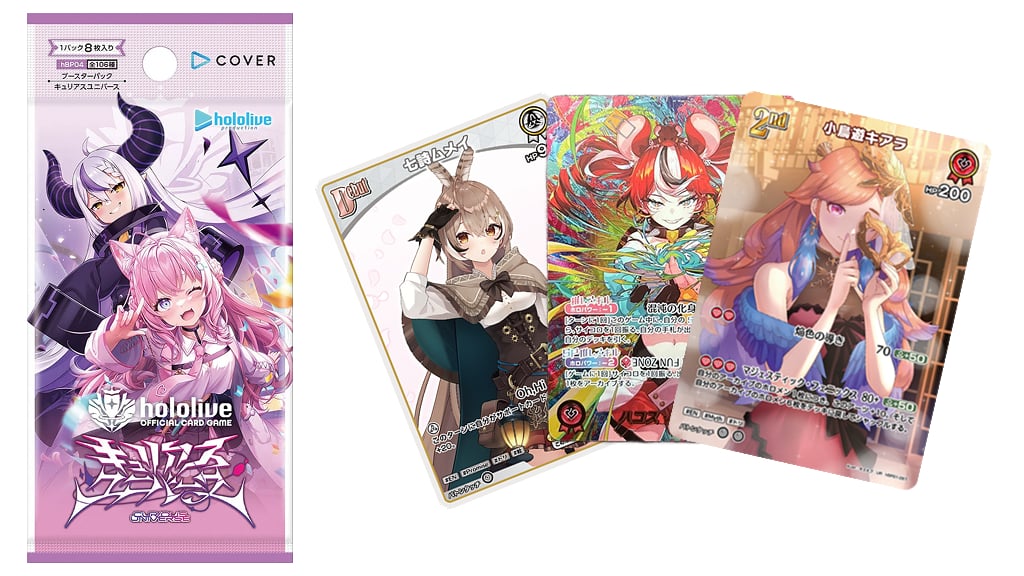
Building the best Trading Card Game (TCG) identification software in the world is one of Ximilar’s core missions. Our TCG ID API is trusted by large-scale enterprises and individual collectors alike, thanks to its unmatched accuracy. For five years, we have refined the most precise card scanning system for card games and sports cards. Every day, we fine-tune our matching models and add newly requested games to the catalogue. That is why we are thrilled to announce our latest addition: hololive OFFICIAL CARD GAME (hOCG).
hOCG launched in Japan in September 2024 and reached a worldwide English release within a year. Its catalogue grew fast, and it shows: fourteen rarity tiers, promo cards that borrow numbers from other sets, and cards that belong to more than one product at once. All 4,189 of them are now identifiable from a single photo, across both English and Japanese editions.
Card Scanning API for TCG
Collectibles Recognition is a single REST endpoint that turns a photo of your cards into precise identification. It detects each card in the frame, crops it, works out which game it belongs to, and matches it against our AI system. The service identifies cards from more than 20 TCGs with 99.9% accuracy, including low-quality, blurry, and low-resolution images. It also recognizes visual features such as foil and holo effects.
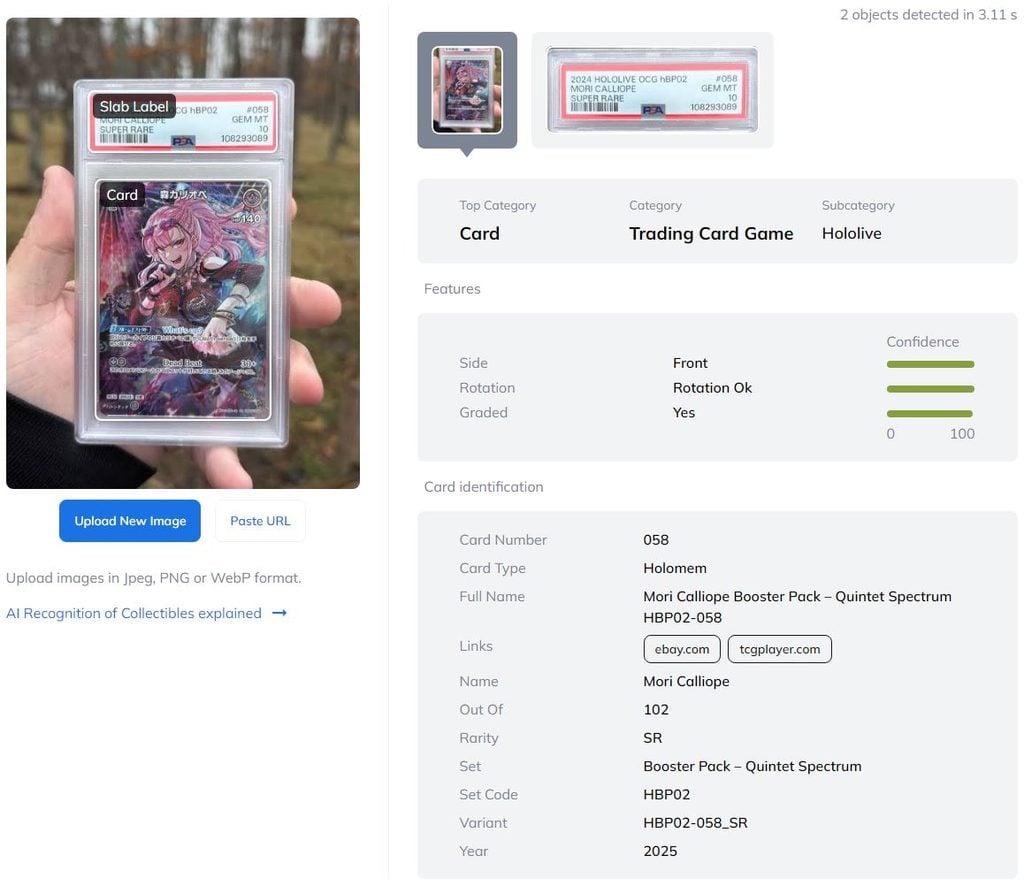
For hololive, no language or game parameter is required. A Japanese Oshi card and an English secret rare can arrive in the same request and come back correctly identified, since the system detects both the game and the language on its own. The photos do not need to be pristine, either. Graded slabs, card sleeves, toploaders, or a phone held at an angle over a shop counter all work, since the model trained on millions of real-world card photos.
Covered Trading Card Games
Hololive OCG (also called the hololive card game or hololive TCG among collectors) joins a wide range of collectible card games already covered by Ximilar’s recognition system, including recent additions like Naruto Mythos and Duel Masters.
Long-time favorites like Pokémon, Magic: The Gathering (MTG), and Yu-Gi-Oh! sit alongside newer hits such as One Piece and Weiss Schwarz. The full list of supported games, card types, and fields is available in the Collectibles Taxonomy.
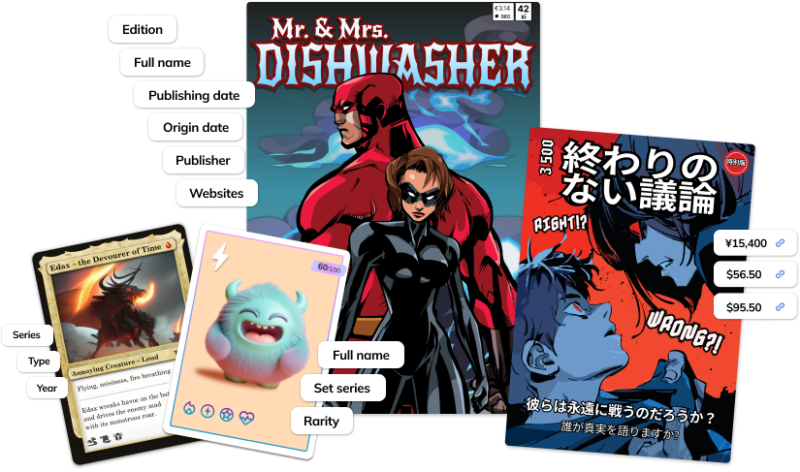
ONE API TO RULE THEM ALL
AI That Understands Collectibles
Recognize, analyze & grade collectibles, find them in databases and marketplaces. Our API was built by collectors for collectors.
How a VTuber Roster Became hololive OFFICIAL CARD GAME
COVER Corporation‘s VTuber agency, hololive production, has an audience of tens of millions. It partnered with trading card game giant Bushiroad, the company behind Weiss Schwarz and Cardfight!! Vanguard, to bring its talents from hololive to the tabletop. The Japanese edition launched in September 2024 and behaved like nothing else in the licensed tie-in space: print runs sold out immediately, and single-card prices climbed right away.
Bushiroad Inc. and Cover Corp. announced the hololive OFFICIAL CARD GAME English Edition in February 2025. It kept the same card designs and rules as the Japanese release, made accessible to hololive fans worldwide, and officially reached shelves on July 11, 2025. You can find every set on hOCG’s official website or through the hololive production official shop.
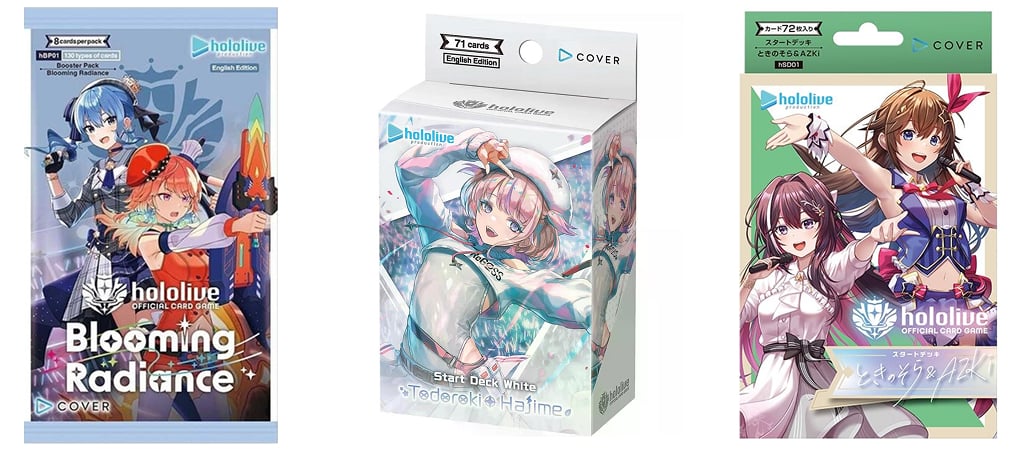
The game’s collector appeal comes from a simple fact: the cards do not feature fictional characters. They feature real hololive members. An Oshi card represents a specific hololive member with a dedicated fanbase, often in an exclusive outfit drawn by a named illustrator.
A parallel rare is not just a shiny game piece, either. It is a unique piece of art depicting someone that hundreds of thousands of hololive fans watch every week. That fan connection drives the secondary market, and it is exactly why artwork-level card identification is not a nice-to-have, but essential.
How to Play hololive TCG?
hOCG uses four main card types: Oshi, Holomem, Support, and Cheer. In this game, you are not fighting a war. You are a producer putting on a live concert, and you bring three separate stacks to the table:
- A 20-card cheer deck: each cheer card is drawn one per turn and assigned to the holomem standing on your stage.
- One Oshi holomem card: the talent you are playing as. Their LIFE value is your life total, and you lose when it hits zero.
- A 50-card main deck of holomem cards and Support cards, capped at four copies per card number.
You win by clearing everything but your opponent’s Oshi off their stage, or by running them out of cards. A standard turn follows six phases: Reset, Draw, Cheer, Main, Performance, and End.
hOCG Sets and Rarity Tiers
The booster pack lineup has grown fast since the Japanese launch: Blooming Radiance, Quintet Spectrum, Elite Spark, Curious Universe, Enchant Regalia, and Ayakashi Vermilion, alongside a run of character-themed Start Decks. You can browse the full set-by-set list on the official card list or the fan-run Holoarchive database. Each new set adds fresh member cards and support cards alongside the chase pulls.
Rarity climbs within the set from Common (C) up through Rare (R), Double Rare (RR), Super Rare (SR), Oshi Super Rare (OSR), and Ultra Rare (UR) under the game’s rarity system. Signed cards and promo cards sit outside the standard ladder. A signed card is tracked as its own variant, separate from the base print’s rarity, and the rarity code often decides what the cards are worth almost as much as who is on them.
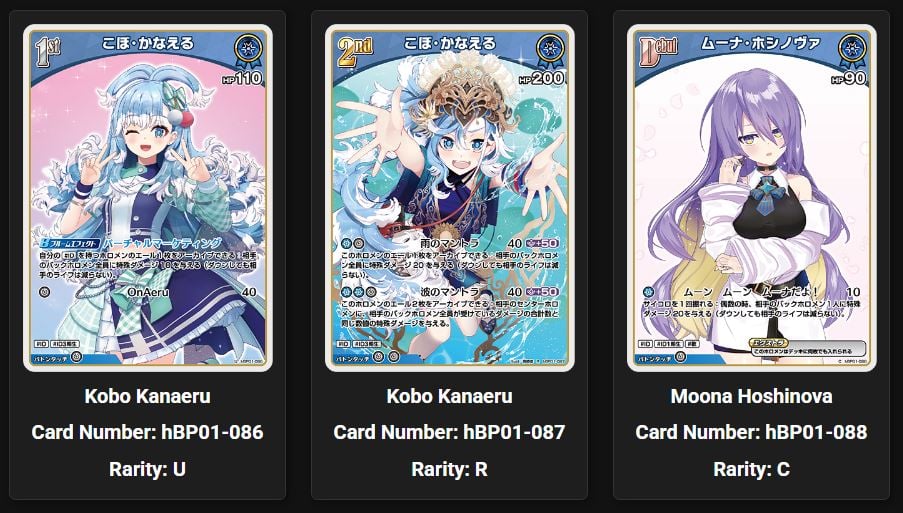
Japanese fans often shorten the name to ‘Holoca’. Since its launch in Japan, the JP and EN print runs have been catalogued separately in Ximilar’s system, so a JP card and its later EN reprint both come back with the correct language and set data.
What Comes Back for Every hololive Card
Every card processed through the /collectibles/v2/tcg_id endpoint returns a consistent set of fields, including set, set_code, name, variant, and rarity. The response also includes a variant field for parallel and alternate-art versions. The table below shows the full response for one example card from the Blooming Radiance card set.
| Field | Example |
| name | Takanashi Kiara |
| full_name | Takanashi Kiara Booster Pack – Blooming Radiance hBP01-067 |
| set_code | hBP01 |
| set | Booster Pack – Blooming Radiance |
| card_number | 067 |
| variant | hBP01-067_UR |
| card_type | holomem |
| out_of | 126 |
| rarity | UR |
| year | 2025 |
Test It via the Ximilar App
You can test hololive card recognition directly in your browser through the TCG Identification form in the Ximilar App, no download required, or try the public demo without an account. We uploaded a photo of a PSA-graded Takanashi Kiara card from the Blooming Radiance booster pack (hBP01-067). The system detected both the card and the graded slab in the same photo, matched the card against the hOCG catalogue, and returned the same name, set, card number, and rarity shown in the table.
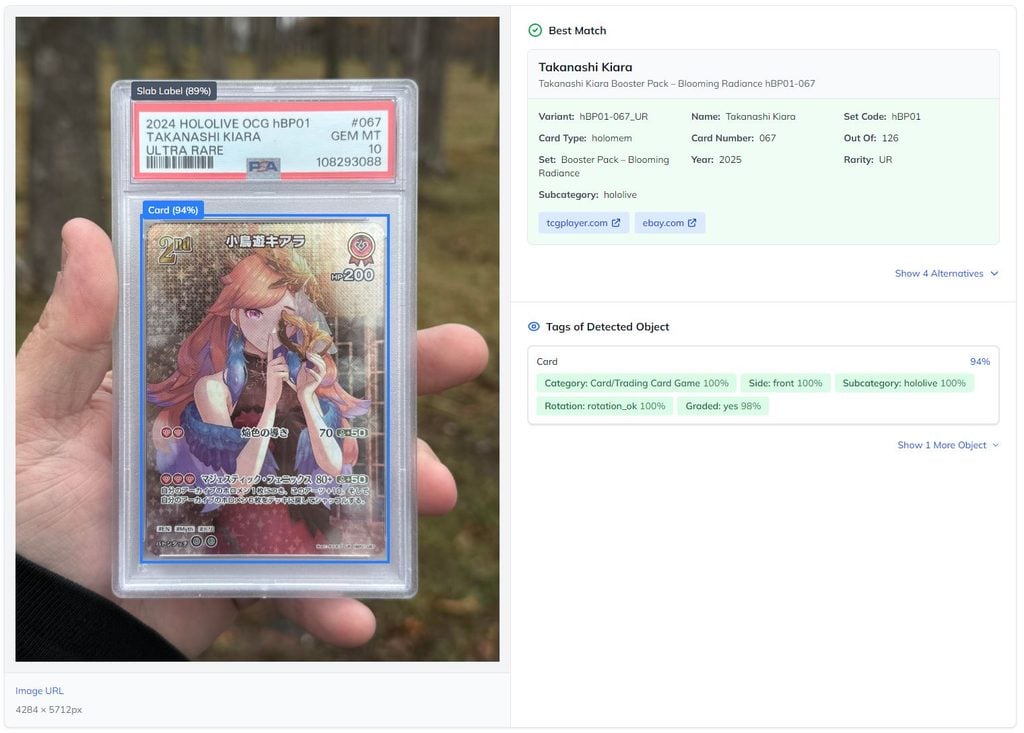
Every test run in the app also shows the matching cURL command and the full API response underneath the results table, so you can copy it straight into your own project. New to the platform? Our First Steps Guide walks through account setup and API access.
Test It via the API
You can also test hololive card identification directly through the /collectibles/v2/tcg_id endpoint. A full quickstart guide is available in the API documentation, and you can get your authentication token after signing up. Replace YOURAPITOKEN with your own token, and keep it private, since it authorizes every request made under your account.
curl --location 'https://api.ximilar.com/collectibles/v2/tcg_id' \
--header 'Authorization: Token YOURAPITOKEN' \
--header 'Content-Type: application/json' \
--data '{
    "records": [
        {
            "_url": "__PATH_TO_IMAGE_URL__"
        }
    ]
}'
And here is the relevant part of the response in JSON:
{
   "variant": "hBP01-067_UR",
   "year": 2025,
   "out_of": "126",
   "name": "Takanashi Kiara",
   "rarity": "UR",
   "set": "Booster Pack – Blooming Radiance",
   "card_number": "067",
   "set_code": "hBP01",
   "card_type": "holomem",
   "full_name": "Takanashi Kiara Booster Pack – Blooming Radiance hBP01-067",
   "subcategory": "hololive",
   "links": {
      "tcgplayer.com": "https://www.tcgplayer.com/product/645705",
      "ebay.com": "https://www.ebay.com/sch/i.html?_nkw=hololive+Takanashi+Kiara+hBP01+%23067&_sacat=2536"
   }
}
More hololive Sets on the Way
hOCG’s catalogue keeps expanding fast, right alongside its fast-moving community. Ximilar tracks every new set as it releases, so newly printed cards become identifiable shortly after launch.
Together with our existing coverage, this makes Ximilar one of the most comprehensive collector card identification platforms available via API. We are continuing to expand game and language coverage, and to sharpen accuracy across everything we already support. Missing a game or a language you would like to see? Let us know. And if you are building a collector app, website, or scanning tool around hololive or any other TCG, reach out to talk through your use case. We are happy to help.

Tags & Themes
Related Articles
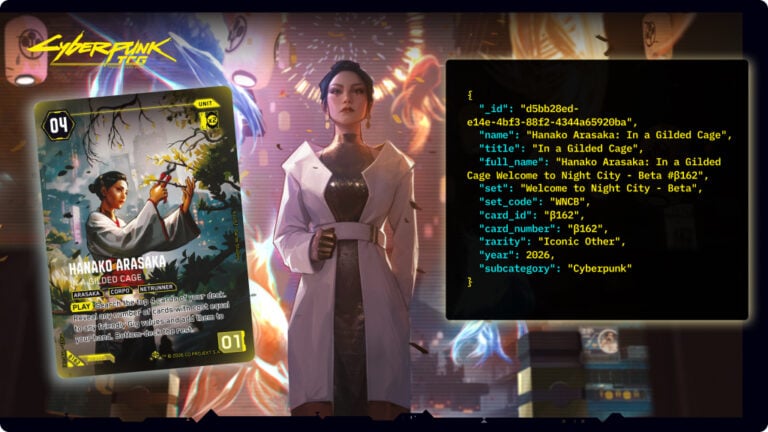
Wake Up, Collector: Cyberpunk TCG Card Recognition Is Here
Ximilar’s card AI now recognises Cyberpunk TCG cards – name, set, and rarity from a single scan. Test it in the App, via API or the demo.
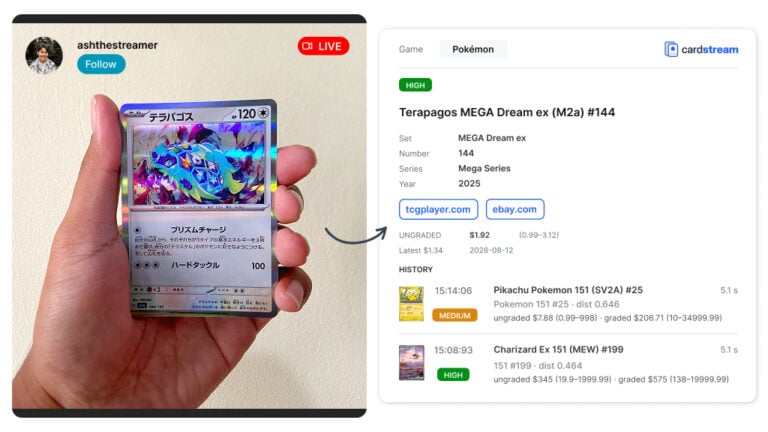
Cardstream: Open-Source Card Scanner for Live Streams
An open-source card scanner for live streams. Cardstream identifies TCGs like Pokémon and sports cards in real time from your video.
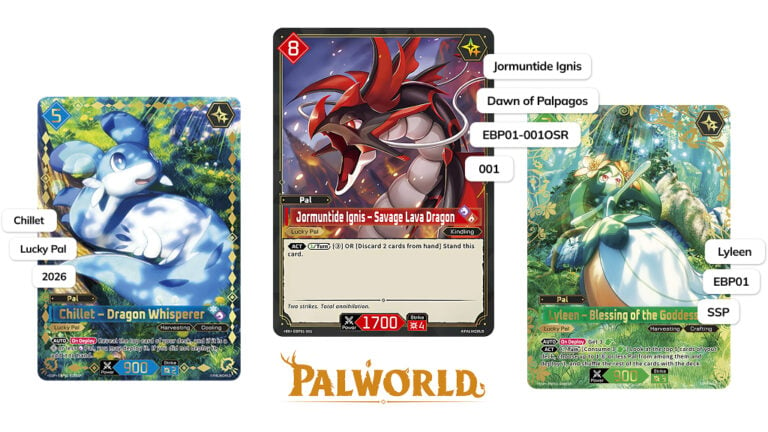
Recognize Every Palworld TCG Card in English and Japanese
Ximilar’s card AI now handles Palworld card recognition in English and Japanese, from a single scan. Test it in the App, via API or the demo.